


Today I’m pleased to offer a guest post by Rhishi Pethe, author of the Jacquard's Loom Substack, on how Waymo and other robotaxi firms are very late to the party of vehicle automation.
Rhishi and I are kindred spirits. We are both fellows of the Roots of Progress Institute; we have both worked in consulting, operations, and Alphabet-sponsored Big Tech across a variety of roles; and are both now writing about how automation will change the world.
Rhishi is intimately familiar with sectors I know less well, notably mining and agriculture, and I learned a great deal from this piece. I am sure you will as well!
Waymo has already driven close to 200 million miles and 20 million rides without a driver. Waymo is already operating in multiple metro areas in the United States, with more than 20 additional cities coming up next, including London and Tokyo. Waymo has opened freeway operations to paying riders in Phoenix. Tesla has a limited number of robotaxis running in Austin.
While Waymo’s achievements are significant, other sectors like mining, industrial security, and agriculture have beaten them in the autonomy game a few years ago.
Hundreds of autonomous-haul trucks have moved millions of tons of rock across Australia and Latin America for more than ten years. Autonomous ground and air units have patrolled airport perimeters at multiple airports for a few years now. Agricultural machinery giants like John Deere and CNH have been pushing for autonomous corn and soybean systems to become fully operational in the next few years, with some operations, like tillage and grain cart management, already working autonomously.1
These domains reached driverless operation at scale before the public-road robotaxi did.
Now, consider Phoenix, where multiple robotaxi companies are operating. One of them, Waymo, provides a robotaxi that drops a rider at the airport. The fence line the Waymo passes on the way in has been patrolled by autonomous ground and air units for the better part of a decade. Two autonomous systems are operating within a mile of each other, but they arrived on two completely different timelines, with Waymo the newest.
In the hierarchy of operational autonomy, the robotaxi is the latecomer.
The rate-limiting factor for adoption is not AI capabilities. It is the four conditions that robotaxis face, each in the most difficult form possible. These are operating environments, liability regimes, unit economics, and operational maturity. These circumstances have had and will continue to have the greatest impact on adoption rates and scaling.
The Road Most Taken Is the Hardest
First, operating environments.
The Pilbara region of Western Australia has a population of only 60,000 people across 500,000 square kilometers, a density of 0.1 people per square kilometer. It sits atop enormous iron ore deposits. The haul roads to and from the mines are private, fenced, and mapped to the centimeter. A 410-ton Caterpillar 797F is four stories tall and has tires taller than a person. It has been hauling rock there autonomously and nearly continuously since 2013. Since then, Caterpillar’s global autonomous fleet has moved more than 8.6 billion tonnes.
It is difficult to visualize 8.6 billion tonnes of rock. For context, the granite George Washington at Mount Rushmore weighs roughly 4,000 to 5,000 tonnes. The global autonomous fleet has moved enough material to carve 1.7 million of them!
Agriculture follows the same logic in its own low-density environment. John Deere unveiled their fully autonomous 9RX tractor at CES 2025. The tractor is a behemoth with tires bigger than human beings and boasts an 800-900 horsepower engine. Deere already runs an automated tillage machine and hopes to achieve fully autonomous corn and soybean production by 2030. The farm reached driverless operation because it operated in a more controllable environment than a street.
When I visited Raven’s (part of CNH, the world’s second-largest agricultural equipment manufacturer) research facility in Sioux Falls, South Dakota, about four years ago, I had the privilege of seeing the testing of an automated grain cart solution in a real field. In 2025, CNH launched its automated grain cart solution as a commercial product.
The operating environments for mining and agriculture are well defined and ideal for the adoption of autonomy. They are bound, mapped, well managed, and almost empty of obstacles, especially of the human kind. Even though a mine and a farm have more dust and dirt to deal with, the operating environment on public roads is much more challenging, with unpredictable human behavior, gnarly traffic conditions, and changing weather.
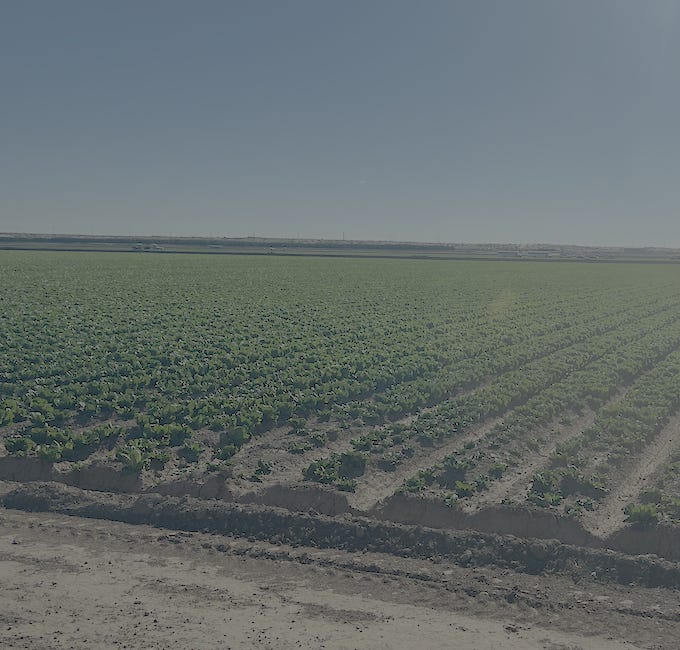
A leafy-green field in Yuma, Arizona. Notice the well-defined rows and almost flat fields devoid of humans or other traffic (photo by the author)
A robotaxi has to operate in one of the hardest contexts. Waymos and Teslas have to navigate public roads shared with pedestrians, cyclists, and human drivers in legal environments they don’t control.
The mine and the farm solved the issue of autonomy by changing the road. The robotaxi has to solve autonomy without that luxury.
Who Owns the Risk?
The second factor shaping where autonomy flourishes first is liability regimes. Andrew argued here a few weeks ago, in “Robotaxis Companies Must Always Pay, that robotaxi operators should accept full operational liability. The clean assignment of responsibility is what lets deployment scale.
Mining is the proof of that concept.
In a mine, the operator and the customer are often the same billion-dollar entity, and workplace-safety law already assigns the risk to that operator on a private site. The mining industry answered the liability question before the trucks arrived.
Farming sits in between. Liability is shared among the manufacturer, the software provider, and the operator. It is less settled than mining but far clearer than the public road.
On public roads, industry and regulators are still litigating this question on a case-by-case basis. As Andrew mentioned in his piece, Benavides v. Tesla was a recent, expensive example.
Autonomy scales fastest if the liability structure is settled. Mining’s liability structure was settled by default.
The Math Has to Work
The third factor is unit economics.
Autonomy went to mining first because the economics were overwhelming. A mining customer runs a fleet worth billions, pays a heavy premium for labor in remote locations, and runs 24/7. The automation of haulage fleets is the chosen path for much of the mining industry in Australia and Latin America.
Removing the cab operator compounds across every truck, every shift, and every commodity. This situation is especially true in Western Australia, where the odds of finding a random human are low, and the odds of finding someone willing to work in the difficult and dangerous mining environment are even lower.
I am working on a project with the Western Growers Association to help them figure out how to automate the harvesting of iceberg lettuce. The economic case for autonomous vehicles is strong for specialty crops like this one; more than half the cost of getting your bagged salad to you is due to manual lettuce harvesting. Access to labor at economically favorable prices is becoming increasingly challenging, making the economic case for automated harvest stronger every day.
Airport perimeter, warehousing, and logistics security tell the same story from the other end of the size scale. An autonomous security unit removes costs associated with hiring and churn, skill-set inconsistencies, and the need to reach hard-to-access areas. For example, Asylon’s DroneCore pairs aerial drones with ground quadrupeds and reports thousands of dollars in annual savings across Asylon’s platform, which has completed more than 250,000 security missions (as of 2025).2
A robotaxi’s per-ride economics, by contrast, are still converging as companies try to optimize product development and operating costs and match them with customers’ willingness to pay.3 The question of “when will Waymo be profitable?” remains valid.
In mining, security, and agriculture, that question was much less in doubt.
Doing the Reps Helps
The final factor to consider is operational maturity.
When building autonomous systems that operate in real-world environments, it takes time to learn and handle edge cases. When I was working on building AI-powered selective weed-spraying technology, we spent months in the field testing the algorithms under different conditions, yet still didn’t make much progress getting it to work. The graveyard of robotics startups is massive, with many companies that couldn’t ‘get enough reps’ to make the technology real-world ready.
Caterpillar’s MineStar Command for Hauling went commercial in 2013, runs 24/7 across six commodities, and reports zero lost-time injuries attributable to autonomous operations. Caterpillar has had 13 years of experience in fleet management, exception handling, and maintenance, which are the unsexy parts of the business. The reps help identify unforeseen issues and build scalable, resilient, and efficient systems that help you manage and run a business, rather than just being excited about cool technology.
Waymo’s genuinely impressive scaling has happened mostly in the last 24 months. The robotaxi’s autonomy stack may be more sophisticated, but the operating discipline around it is younger. Waymo and other robotaxi companies have used simulation to “learn” and expose unseen use cases, but real operating environments still throw surprises.
Autonomous tillage equipment and grain-cart solutions have undergone trials in real-world settings for many years before entering commercial production. By contrast, right before Christmas last year, a power outage in San Francisco caused many Waymos to stall at intersections, block arterial roads, and, according to at least one city official, impede emergency vehicles. It appeared as if Waymo robotaxis compounded the problems caused by the blackout.
In physical systems, that gap matters more than people expect.
Why Is This Reframing Important?
When we think about autonomous vehicle adoption, we need to reframe what makes adoption happen faster and in more domains. Once the technology issues are resolved, the adoption curve will be driven (pun intended) by factors such as the operating environment, liability, economics, and experience.
Why does this reframe matter for people who think about AVs for a living?
It matters, because if factors like operating domain, risk infrastructure, unit economics, and experience gate autonomy are considered, then the interesting investment question isn’t only “when will the robotaxi be profitable.” The interesting investment question is also where innovators can apply autonomous technology in an economically sustainable and safe manner.
Robotaxis are a major domain that lacks the advantages of a controlled operating environment, clear liability regimes, favorable economics, and years of experience.
For any domain, the differentiation will not come purely from raw model performance. It will come from an operational track record, edge case management, and deep customer relationships.
For most of the last decade, mining autonomy, robotaxis, autonomous tractors, and security robots were separate engineering worlds with little in common. But now a common technical stack is emerging across all of them, which includes foundation models, vision models, imitation learning, and diffusion policies for control.
The same underlying machinery that drives a robotaxi is starting to drive a tractor, a quadruped, a humanoid. When the stack converges, the lessons from the domains that solved autonomy first will become transferable to those still catching up, whether it is mining’s operating discipline, security’s unit economics, or agriculture’s environmental control.
The story of Physical AI and automation is complex, with multiple threads spanning robotaxis, mining, security, industrial applications, transportation, and many other domains.
Paying attention to technology issues is extremely important. It is also exciting and exhilarating, as smart teams and organizations solve one difficult problem after another, like Mark Watney in The Martian. But if we are interested in seeing these technologies scale and actually have the positive impact they promise, we will have to pay attention to the other, non-flashy parts of the autonomous adoption equation.
Waymo is not leading the autonomy party. It just showed up to join it.
Which domain will quietly solve autonomy next, and who will notice before the market does? I plan to pull this thread every other Wednesday on Jacquard’s Loom.
This has been a Changing Lanes guest post by me, Rhishi Pethe. I am a solopreneur working on automation, physical AI adoption, and digital transformation in legacy industries. I have experience working at Google X, Amazon, and multiple startups in supply chain, automation, and AI.
My Substack newsletter, Jacquard's Loom, is for anyone curious about how automation and physical AI will impact our daily lives. Jacquard’s Loom will take a holistic approach by examining the how, what, when, and why (or why the hell not?) of automation and physical AI.
I would like to thank Andrew Miller for giving me the opportunity to write this guest post for Changing Lanes, and Grant Mulligan for his honest feedback on earlier drafts.
Tillage is the agricultural preparation of soil by mechanical agitation, such as digging, stirring, and overturning. It is used to prepare seedbeds, manage crop residues, integrate fertilizers, and control weed growth.
A grain cart is a large, tractor-pulled agricultural trailer equipped with an internal auger system. Also known as a chaser bin, it acts as an in-field ‘runner’ during harvest, driving alongside a combine to catch grain and transferring it to waiting semi-trucks or wagons. Instead of a combine harvester stopping repeatedly to empty its full hopper, a grain cart drives beside the moving combine to collect the grain on the go. This eliminates downtime and can increase harvest efficiency by over 20%.
“Evaluation of Mobile Robot Teams for Security of Caltrans Equipment Yards and Maintenance Stations”, Report from California Department of Transportation Division of Research, Innovation and System Information.
For more, see “The Economics of Robotaxi” report by Lux Capital.
this is one of the clearest explanations I’ve seen for why robotaxis feel both revolutionary and behind schedule at the same time. Mining and ag solved autonomy in controlled, high-stakes, high-margin environments with clear liability and brutal economics. Public roads are the final boss level: unpredictable humans, weather, mixed traffic, and fragmented regulation
my takeaway, it's cost driven, which means cheap microtransit EV/AI solutions are 5-10 years away. The other is in depth and continual data collection and optimization on source/destination to optimize services.
Ottawa's upgrade from an optimized express bus system to an LRT/local fixed city bus route model has failed (src/dst time trippled in some cases) as the design metric was land, construction and operations costs with effecvely no consideration for src/dst time and reliability. Another factor is the LRT assumptions included Central Ottawa employment vs WFH. A related problem is lack of dedicated bus lanes or BRT routes, where self driving EVs jave a speed/time advantage vs personal car
Local micro transit/mobilty client combinations sound like a natural particularly with the shift to senior dominate demographics.
Traval needs and are always changing, including the cost of provate vehicles and insurance. I suspect city/suburb transportation will be very different in 2036.