


Welcome to Changing Lanes, where we explore how innovation in transport and artificial intelligence—particularly vehicle automation—will reshape our society, and how we can guide that transformation toward better outcomes.
My name is Andrew Miller, and I write about the intersection of technology, policy, and social change. My goal is to help you understand not only what's happening in mobility innovation, but what it means for our cities, our economy, and our daily lives.
This guide will introduce you to the key themes of this newsletter, and direct you to the best, most popular pieces that explore them.
The Future of Automated Driving
Driving automation is one of the most significant technological shifts of our time. Since its advent in 2005, it’s been the subject of endless hype, which has obscured the technical challenges and social implications it offers, as well as the need for sophisticated policy to implement it well.
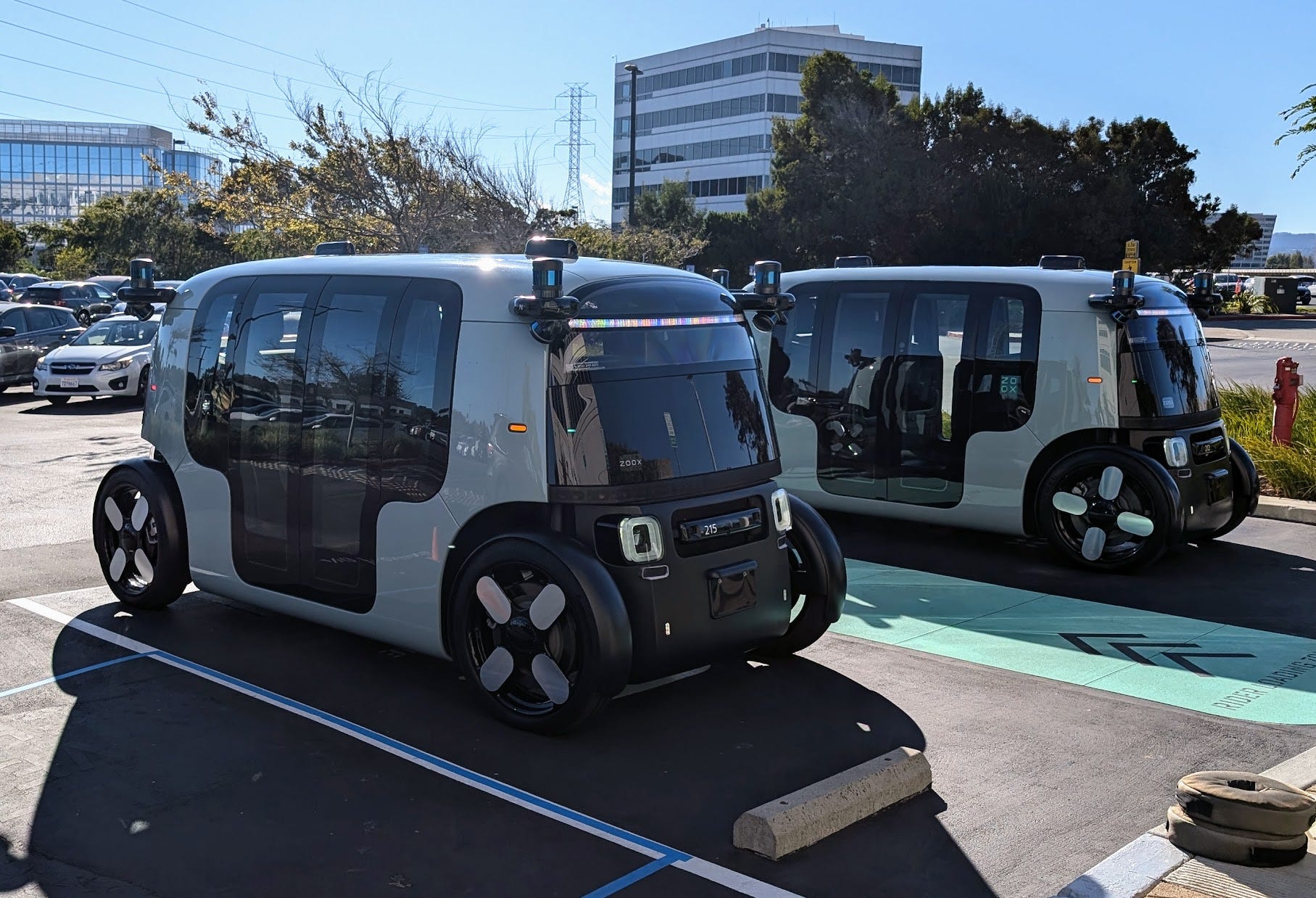
Zoox robotaxis, Foster City, California (author’s photo)
Essential posts in this theme include:
Tesla Isn't Going to Succeed in Robotaxis—the inaugural post at Changing Lanes, that provides a clear-eyed analysis of the challenges facing Tesla’s ambitions to succeed as a robotaxi company
The Cruise Shutdown Is Bad News for Tesla—What the demise of Cruise, the second-place American robotaxi firm, tell us about what it takes to succeed in this new market
Automated Driving: the Outside View—a framework for understanding where this technology is at, and where it’s going
Driving Automation Will Reshape Time and Space—consideration of how not having to pay attention in a motor vehicle will have far-reaching implications to how we live, and where
The Future of Public Transit
Successful cities absolutely depend on transit service, but so much of this service is bad: expensive, unsafe, unreliable, or paltry. Fortunately, it doesn’t have to be this way. Improving it will require careful thought about our goals, tools, and resources, and how it interacts with other urban systems.
The essential pieces in this theme are my four-part series on Progress and Public Transit:
The Endless Emergency: why is transit service so consistently bad, no matter how much funding it gets?
An End to Subsidy: escaping the Endless Emergency through better fare policy
Density by Design: understanding the crucial relationship between transit and urban form
Vehicle Automation: fixing the Endless Emergency through better technology
A companion piece, Skyways for the Suburbs, considers how that innovative-for-North-America transit tech, the gondola, might succeed here in certain conditions, and help tame the Endless Emergency.
My take on fare-free transit, considered standard among transit insiders but contrarian among the wider public, Public Transit Should Not Be Free, also sparked significant discussion.
Intercity Travel
Canadians and Americans face special obstacles in traveling between cities. One of these is railfan nostalgia; the role that rail played in the early decades of Canada and the USA makes it harder to think clearly about what role it should play in the future.
Essential pieces on this subject include:
Don’t Privatize Amtrak: the agency has its problems, but privatization won’t fix them
Canada Shouldn’t Build High-Speed Rail: it’s the wrong solution, implemented in the wrong way, by the wrong people
Canada Should Make Air Travel Sustainable: what Canada (and the United States) should do instead
Innovation and Progress
Beyond specific technologies or policies, I explore how innovation shapes society and how we can better guide technological progress.
Start with:
Orwell Was Right About Progress: understanding the relationship between technology and social change
Mustard Gas, Dynamite, Leaded Gasoline, and A.I.: helpful analogies for the risks posed by artificial intelligence
Why We Should Have Known Hyperloop would Fail: an overview of why Hyperloop was doomed from the start, and why people who should have known better supported it anyway
What to Expect
I publish weekly on Tuesdays, offering in-depth analysis pieces examining key developments in transportation, technology, progress, and policy. At least once a month these are published only for the benefit of paying subscribers. During end-of-year holidays, I often publish short jeux d’esprit rather than in-depth policy analysis.
A Note on Generative AI
Since some readers asked, here is Changing Lanes’ policy on the use of generative AI. It relies heavily on the policy my co-authors and I published in our book, The End of Driving.
In creating my newsletters, I employ various generative AI systems as part of my writing and editing process. These tools serve as collaborative partners in brainstorming, identifying potential gaps in argumentation, suggesting alternative phrasings, and assisting with copyediting. This use of AI mirrors the use of more traditional writer’s tools: spelling and grammar checkers, style guides, and the efforts of my human editors. I view AI in the same light as these: as a valuable tool in the writer’s toolkit, and one that enhances rather than diminishes the creative and intellectual process.
I am being transparent about my use of AI as a writing tool to help normalize these tools as legitimate aids in the creative process.
To be clear: the ideas, arguments, and conclusions in this newsletter are my own. Where I use AI, I do so only to help express these more effectively, and to ensure the final text meets the high standards I set for myself and that I believe my readers deserve.
Getting Started
If you're interested in understanding how transportation innovation will reshape our world, and how we can guide that transformation to advance human progress, I encourage you to:
Subscribe to receive new posts directly in your inbox
Join the conversation by commenting on new issues
Share pieces that you think others would enjoy with your network
Thank you for being here. Together, we're helping to build a better future, one trip at a time.
Dr. Miller:
Just one question, though: “The Future of Automated Driving”: If it’s automated, how can it be called “driving”? Would it not be better framed as “automated motoring”? Am interested in getting your take on this.
Kind regards,
— Alan