


Changing Lanes usually covers innovative mobility. This week’s piece is a detour: local, personal, and less policy-heavy than usual. Regular programming resumes next week.
For the first time ever, we couldn’t get a seat at the bar. The Long Branch Social House was packed, as full as we’d ever seen it. Instead of sitting in our usual place, we found an available table (one of only two) and settled in.
Our server T came over, and we asked him, in all innocence, what was happening tonight that had brought in a crowd.
He gave a forced smile. “You haven’t heard? We’re closing tomorrow. This is our last night in business.”1
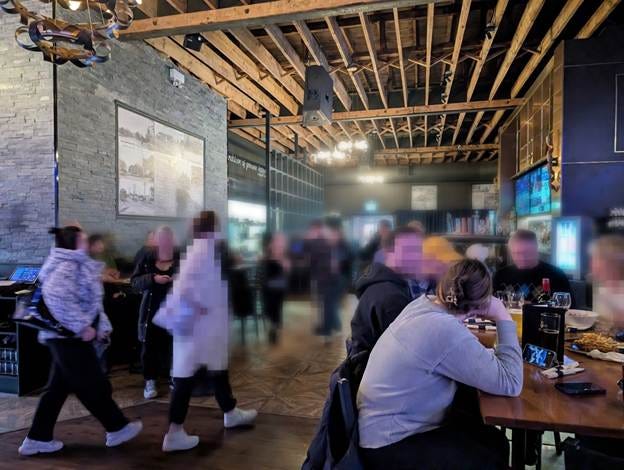
I moved to Long Branch in southwestern Toronto four years ago and began exploring the neighbourhood. Back then, a different bar operated in that space, which I found unimpressive. Nothing was wrong with it; the food, the service, the atmosphere were all fair but not good. After my first visit I left with no intention of going back. When I found out later that it had closed, I was unsurprised.
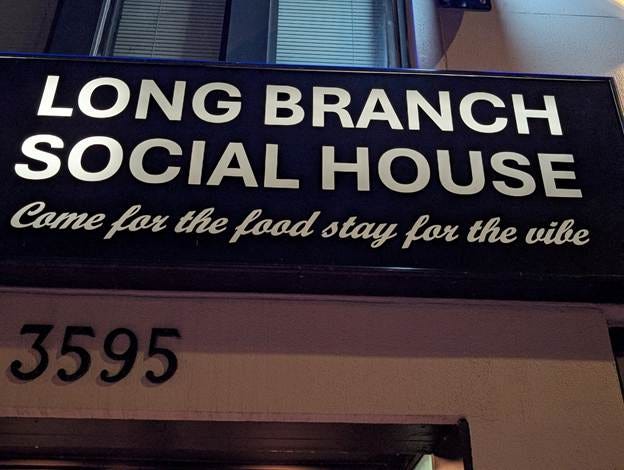
Later my girlfriend, now my wife, moved in with me. She uses Instagram, where she follows local businesses, and learned that the site had new management. It was now operating as the Long Branch Social House, and she thought we should try it out. I don’t remember when exactly that was, but I suppose it was about two-and-a-half years ago, shortly after it opened. Coloured by my previous experience, I was skeptical, but willing to give it a try.
It’s funny, now, to realize that I don’t remember that first visit of ours, given how important it was. But that’s because all our visits ran together; for the last two and a half years, my wife and I went there at least once, and sometimes twice, pretty much every week.
The sociologist Ray Oldenburg spent most of his career thinking about places like the Social House. In The Great Good Place, published in 1989, he coined the term ‘third place’, meaning the informal gathering spaces that exist outside home and work: the café, the barbershop, the pub. Home is the first place. Work is the second. The third is where you go when you don’t want to be in the first two.
Oldenburg identified several qualities that define a genuine third place. It is neutral ground, with no one playing host. It’s socially levelled, with no hierarchies. It has a core of regulars who set the tone, who by example teach newcomers how to behave in the space, and who help those newcomers feel included. And it provides what Oldenburg called “a home away from home”: the same feelings of warmth and belonging, but without the obligations.
My wife has had locals before, and has lost them. She has learned to hold them loosely, knowing they may not last. I had no such experience: this was my first local, and my first time losing one.
And so I wasn’t prepared for how much it stung.
My wife and I sat, and took in the crowd, and nursed our drinks. They were our usual order: T hadn’t needed to ask, only to confirm (a glass of Sauvignon Blanc for her, an Old Fashioned for me). And, to my own surprise, I grieved, just as I have when a loved one has died. I asked myself, what am I grieving? What have I lost here? I thought about third places. Oldenburg wrote that “nothing contributes to a sense of belonging in a community as much as membership in a third place”. And that was what it was. We had lost a small part of who we were.
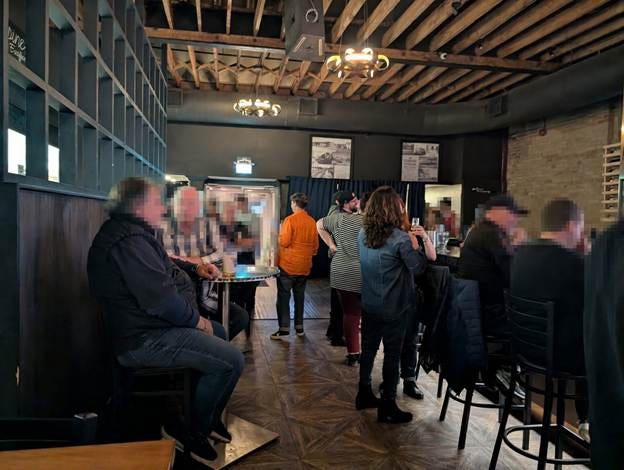
C owned and ran the Social House with M. We saw her more often than him, as they also ran another establishment nearby where he spent the bulk of his time. T, a jolly hockey dad, and D with her dazzling smile, were the people we saw most often behind the bar. K was occasionally working a shift when were there, but we saw her more often as a fellow patron; she liked the place enough to spend time there off-shift. We saw less of A and the other wait staff, as they managed the dining area and we preferred the bar, but we always shared smiles and waves, and often a brief chat.
The principal attraction was the food, all of which was made in-house and was consistently great, much better than typical pub fare. When I was hungry, I often ordered the burger, with its side, a mountain of crisp-but-not-oily French fries. When I just wanted a bite, the fish tacos were consistently great. And I always checked the seasonal menu… its greatest hits included the shrimp scampi and the Scotch egg. I pleaded for those items to make the permanent menu, and was assured that they would come back (famous last words).
There was often live music, which ranged from ‘merely pleasant’ to ‘quite good’. Many of the patrons there on the last night were musicians who had graced the Social House’s stage, and had more to mourn than I did: the loss of a venue, of which there are fewer all the time, where they could get paid to perform. When the music wasn’t live, the sound system seemed to play only the greatest pop hits of the 1980s. I was aware that I was being pandered to, that this playlist—Prince, Madonna, Springsteen, Michael Jackson—had been calibrated for people of my age and demographic. I didn’t care. When you’re home, people cater to you, and the playlist meant I was where I belonged.
It was a working-class place; the patrons tended to jeans, baseball caps, and sports jerseys. There were multiple TVs. Some showed pub trivia, others showed compilations of equal parts ‘sinking a basket, at midcourt, while looking away from the net’ athletic feats, and ‘guy in the gym hits himself in the crotch with a free weight’ follies. The TV in the dining room wasn’t visible from where we usually sat but always seemed to be showing Gordon Ramsey’s Hell’s Kitchen on loop. No matter where one sat, there was always a visible TV showing a sports match.
But the Social House also had a huge disco ball in the open area in front of the stage. It hosted drag shows on Sunday afternoons in the summer; we attended a few, and had hoped to attend more. I have almost no interest in sports, but enjoy the company of people who have great interest and let it show. The place was a big tent, and contained multitudes. It never felt like a caricature of itself, like Cheers; or maybe it’s more accurate to say that, while I was there, I never felt like Frasier Crane.
Our visits began to run together. The Social House stopped being somewhere we decided to go and became somewhere we simply went, the way we go down to the lake on Saturday mornings, without discussing it. That’s how a good local works; you don’t notice it. It becomes part of the background, of the texture of your life.
On those Saturday visits to the lake shore, we would occasionally see C from a distance, exercising his dogs. He lives in the neighbourhood, as we do; the Social House was operated by local people for the benefit of same. I keep returning to the fact that some of the staff liked to socialize there when not on shift; it wasn’t just part of the community, it was a community.

I don't know, but I suspect, that the Social House closed because its landlord raised the rent, with an increase steep enough that running the place no longer pencilled out.
In Canada, there are no limits on commercial rent increases. A landlord may raise rent by any amount at lease renewal, with no obligation of reasonableness and no recourse for the tenant. Some urbanists think a truly open market like this one promotes better outcomes in the long run. Others think that commercial tenants, like residential ones, should be entitled to limits on rent increases, in order to permit long-term planning and encourage stability of occupancy. I haven’t studied the matter in sufficient depth to hold a position. But I do shake my head at the short-sightedness of a landlord who prefers an ultimatum to a negotiation.
I suppose that the landlord made a take-it-or-leave-it offer, and I suppose that the Social House chose to leave it. That means that the staff have lost their jobs, the musicians have lost their bookings, the party-goers (and there were a lot of them, retirement parties and 50th birthdays and fundraisers) have lost their venue.
But the landlord has lost the rent. The building will now, in all likelihood, sit empty through the summer, which is precisely the season when a patio operation in Toronto generates revenue. It’s baffling to me that the owner would rather kill an existing business that was doing well, and better all the time, than take the chance that a new tenant, saddled with even higher rent, will take a gamble on setting something up there.
I don’t know the details. The landlord, whoever they may be, may be in the perverse situation that Andrew Burleson describes, where their financial position is better off with a high rent on paper, even if no one’s paying it. Or perhaps they are simply looking for an exit. Lakeshore Boulevard is under sustained development pressure: a few steps away from the Social House, just down the block, a retail strip is about to be replaced by a 43-storey condo tower. Perhaps such a redevelopment is in the Social House’s future; it does have an unusually deep lot, both for the area and for its particular block.
If that happened, it might be a good thing. The Social House is walking distance from a transit hub, home to both the Long Branch commuter-rail station and the terminal stop of the Lake Shore streetcar. I know that because on some evenings my wife would take transit from her office and walk over to the Social House to meet me there. A transit-rich area falling within Toronto’s boundaries, like this one, should be denser, and it seems that the market believes that too.
I agree with Addison Del Mastro that we urbanists should honour the past we have lost without ceasing to build the future. But today I’m more in the mood for the former.
Robin Dunbar is an Oxford anthropologist who has studied what British pubs do for the people who spend time in them. He has found that people with a local pub have larger social networks, feel more socially engaged, and are more likely to trust their neighbours. Those without one have significantly smaller networks. That matters, because our social networks “provide us with the single most important buffer against mental and physical illness”.
A local pub is part of that buffer, which is why it is concerning that we’re losing so many of them.
Three minutes’ walk away from the Social House, just one block over, there used to be a beer-and-chicken-wings place, Sloppy Joe’s. It closed in March 2025 after 54 years of operation by two generations of the same family. The operators’ final statement read “Our father opened this business in April of 1971, driven by the dream of creating a neighbourhood gathering place that felt like home.” Sloppy Joe’s is one of the more than 5,000 bars and nightclubs that Canada has lost in the past twenty-five years.
In the year 2000, the country had almost 9,000 such establishments. Today there are fewer than 4,000.
There are many causes for the change, and they stack. The pandemic ban on going out was more than many places could handle. Since it ended, we’ve had rampant cost inflation. Meanwhile, social drinking has been on the decline for decades, while the Internet has been on the rise. I mention the Internet because it’s the most obvious contributor to the broad and ongoing social trend to stay in rather than go out. A guest writer on Derek Thompson’s Substack described this recently as “toxic solitude”. In Canada, a 2024 survey found that 60% of Canadians feel disconnected from their community, and 36% report having no third place at all.
We don’t go out to third places, so they struggle and close, so it’s harder to find a third place, so we don’t go out, and the vicious cycle turns.
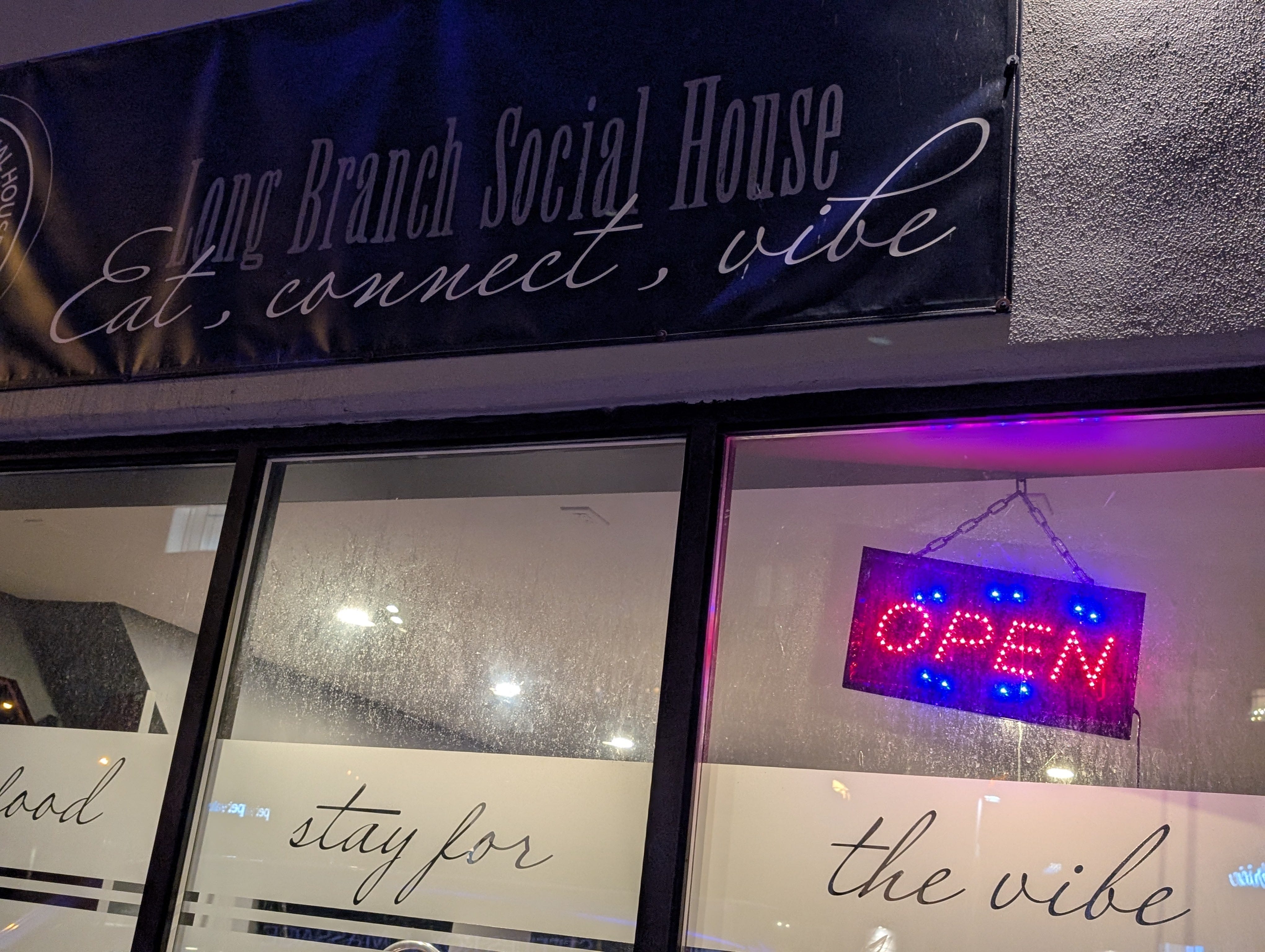
Friday night, we settled our bill. We said our goodbyes. The crowd was thinning now; the hard core would remain for a few more hours, but others had already begun to leave, and it was our turn. We walked out and went home.
Love songs sound saccharine, until you fall in love. Breakup songs seem overwrought, until you’ve been dumped. And if you’ve never had a local, this line seems trite: that sometimes you want to go where everybody knows your name.
But it turns out to be true.
So does this:
Every new beginning comes from some other beginning’s end.
Since I haven’t asked permission to write about private citizens, I’m not going to use any proper names in this piece.
Thanks for sharing, Andrew, and sorry that your third place closed. I think this is one of those universal human experiences that we all run into sooner or later, but knowing that doesn't make it less of a bummer. As you say, the hopeful side of this is that the neighborhood will continue to be vibrant and worthwhile new things will come around 🤞