


This is a special edition of Changing Lanes, bringing you several announcements.
Firstly: I’m writing another book.
Canada is the world’s second-largest country by land area, but more than 70% of Canadians live in just 41 cities. As one former Prime Minister quipped, “If some countries have too much history, we have too much geography”. A country like this will only be as successful as its transportation systems permit it to be.
We used to know this. The defining national project of the country’s opening decades was the Canadian Pacific Railway, linking the whole nation coast to coast. That project was completed with the driving of the last spike of the railroad at Craigellachie, British Columbia (now a national heritage site). In the twentieth century, we built the Trans-Canada Highway, the St. Lawrence Seaway, and a network of world-class airports.
And then, sometime around the centennial of Confederation, we stopped. Where once we were a country that built transportation, we became one that forbade building. Canada’s productivity, confidence, and national unity has suffered in the decades since; this is part of the reason why.
But there is one advantage to waiting so long to build: we can skip ahead. Revolutions in mobility are happening now, or about to happen, and we can move to them directly. Automated freight trucks, robotaxis, electric air networks, supersonic aircraft, carbon-free jet fuel… all are poised to change our country for the better, if we let them. As a great Canadian observed, the way to win is to skate not to where the puck is, but to where it’s going to be.

The Last Spike was the culmination of the great nation-building project of the 19th century. The next spike is ours to drive.
The Next Spike: How to Get Canada Moving Again is forthcoming in 2027 from Sutherland House, as part of its Sutherland Quarterly series. Please keep following Changing Lanes for updates.
Secondly, next month I’ll appear at the Vision Zero Cities conference at NYU in New York, at the panel on Emerging Technology for Street Safety. The annual gathering unites city officials, planners, engineers, advocates, scholars, and industry leaders who are dedicated to the common goal of achieving Vision Zero, i.e., the complete elimination of road deaths and injuries. Frequent readers of Changing Lanes will know that I think driving automation is the most promising tool on offer for achieving Vision Zero… if we deploy it with appropriate policy and regulation. On the panel, I will offer my views on what we need, and how to get it.
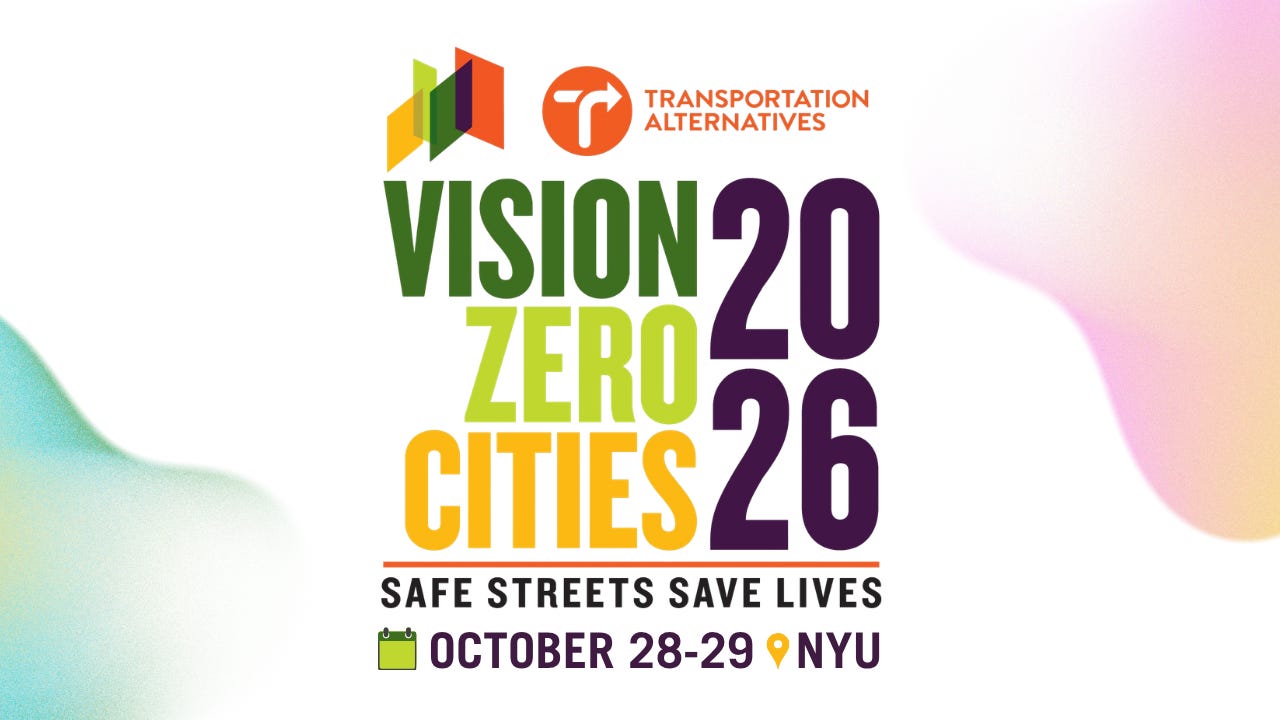
I hope you can join us! Registration is now open.
Finally, I’m also pleased to announce that on Saturday 9 January, I’ll give the opening keynote at TransportationCamp DC, the unconference Smart Growth America holds the day before the Transportation Research Board’s annual meeting in Washington, D.C.
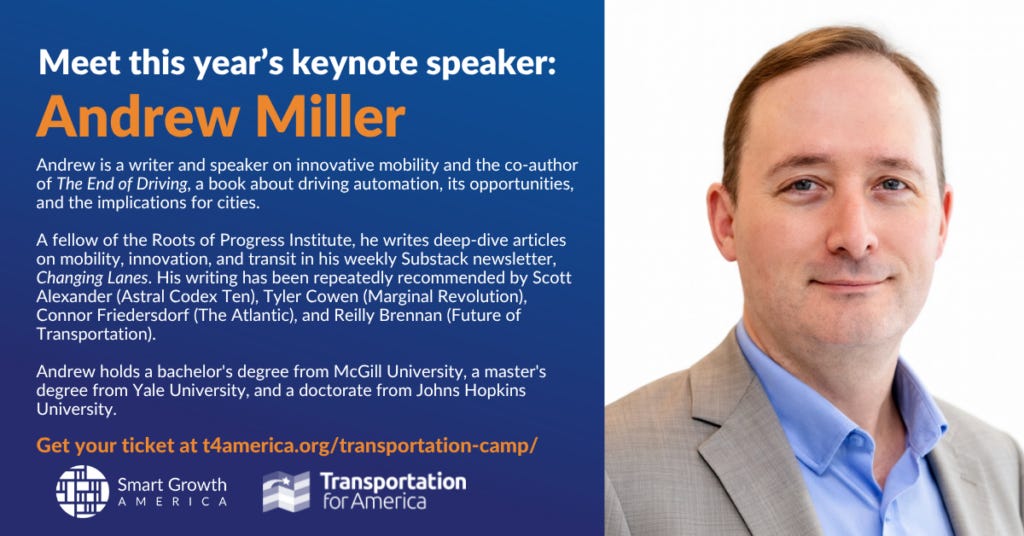
I’ll be speaking on the subject of driving automation as it applies to cities. Some people think that robotaxis are the solution to a city’s problems, even if they haven’t bothered to ask what those problems might be. Other people think that cars of any sort are antithetical to what makes cities great, even if they haven’t bothered to ask if the problem is the car, or the (human) driver.
I think that both sides miss something important, which is that cities have goals and mandates, and that driving automation is a wonderful tool for civic leaders to employ to fulfill their objectives; their objectives, not those of robotaxi companies nor any other special interest.
I will make that case in person. I hope to see there!
Photo credit: Alexander Ross, Hon. Donald A. Smith driving the last spike to complete the Canadian Pacific Railway, 1885, Craigellachie, British Columbia. Library and Archives Canada, accession no. 3194527. Colourized and sharpened by ChatGPT.